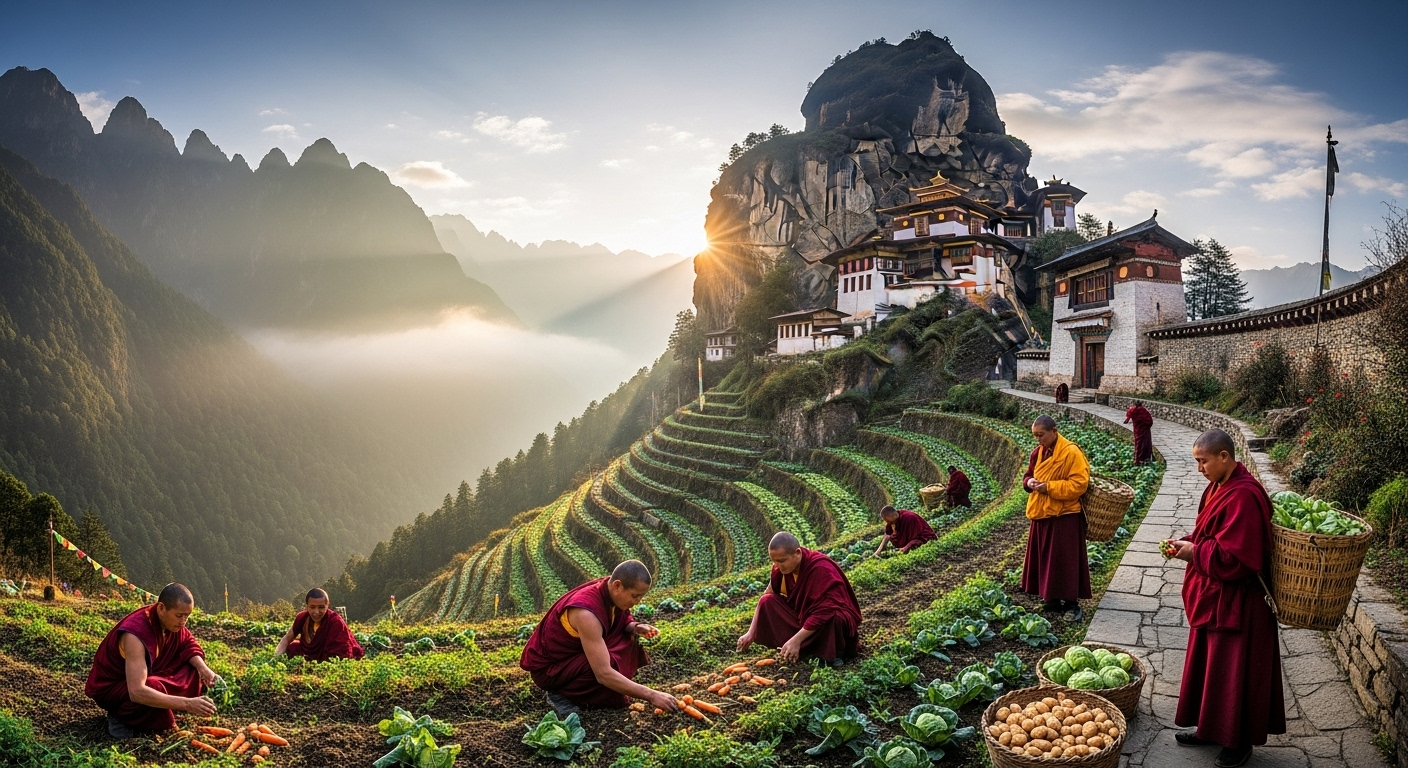
Mountain monasteries serving farm-to-table meals invite travelers into a world where food, land, and spiritual practice exist in quiet harmony. High above valleys and cities, these monasteries prepare meals using ingredients grown on nearby slopes, terraced gardens, and small community farms. Eating here feels different because it is different. Every meal reflects patience, discipline, and respect for nature.
Many visitors arrive for silence, views, or architecture. Yet what stays with them most is often the food. Simple dishes prepared with care become powerful memories, reminding travelers that nourishment goes beyond taste.
Why Monasteries Became Centers of Sustainable Food
For centuries, monasteries survived through self-reliance. Remote mountain locations forced communities to grow their own food, manage resources carefully, and plan around seasons. Over time, this necessity shaped food traditions rooted in sustainability.
Rather than abundance, monasteries focused on balance. As a result, meals supported both physical strength and mental clarity.
Today, these traditions feel surprisingly modern.
Understanding Farm-to-Table in a Monastic Setting
In mountain monasteries, farm-to-table means knowing exactly where food comes from. Vegetables grow outside kitchen doors. Herbs dry in open air. Dairy arrives from nearby farms or monastery animals.
Nothing travels far. Nothing arrives without purpose.
This closeness between land and plate creates food that feels grounded and alive.
Himalayan Monasteries, India: Food for High Altitudes
In regions such as Ladakh and Sikkim, mountain monasteries rely on ingredients suited for cold climates. Barley, lentils, seasonal vegetables, and dairy form the core of daily meals.
Food here prioritizes warmth and energy. Meals support monks through long meditation sessions and physical labor.
Visitors who share these meals often notice how filling simple food can be.
Explore Himalayan culture:
Incredible India
Mount Athos, Greece: Ancient Agriculture in Isolation
Mount Athos has preserved monastic life for over a thousand years. Its monasteries maintain vineyards, olive groves, vegetable gardens, and bakeries.
Meals follow religious calendars, which means visitors experience seasonal eating shaped by fasting and feast days.
The simplicity of food contrasts beautifully with the dramatic mountain and sea setting.
Learn about Mount Athos heritage:
Visit Greece
Bhutan’s Mountain Retreats: Mindful Eating in the Himalayas
Mountain monasteries and retreats in Bhutan emphasize balance in all things, including food. Meals rely on local grains, vegetables, dairy, and herbs.
Many meals are eaten slowly, sometimes in silence, allowing awareness of flavor and texture.
Food becomes part of meditation.
Discover Bhutanese traditions:
Bhutan Tourism

Italian Apennine Monasteries: Slow Food Before It Had a Name
In Italy’s Apennine Mountains, monasteries follow agricultural traditions that predate modern cuisine. Cheese-making, bread baking, and vegetable cultivation remain central.
Meals highlight olive oil, grains, legumes, and fresh produce sourced nearby.
Guests often share tables, reinforcing community.
Explore Italy’s cultural regions:
Italia Tourism
Shaolin Mountain Region, China: Plant-Based Discipline
Monasteries near the Shaolin Temple serve vegetarian meals grown on monastery land. Seasonal greens, mushrooms, tofu, and grains dominate menus.
Meals support martial arts training and meditation.
Food here feels light yet energizing.
Learn about cultural travel in China:
Travel China
What Dining at a Mountain Monastery Feels Like
Meals follow structure. Guests eat at set times, often after prayer or meditation.
Silence is common. Conversation, when allowed, remains minimal.
This rhythm shifts attention inward.
The Role of Seasons and Preservation
Mountain growing seasons are short. Monasteries rely on drying, fermenting, and storing food for colder months.
Every harvest matters.

This careful planning ensures year-round nourishment without waste.
Why Travelers Find These Meals Memorable
Eating food grown nearby creates emotional connection. Meals feel intentional rather than indulgent.
Many travelers realize how little they need to feel satisfied.
The experience lingers long after departure.
Respecting Monastic Traditions
Not all monasteries accept guests. Rules vary, including dress codes, silence, and photography restrictions.
Respect ensures continued hospitality.
Approach meals as shared moments, not services.
Lessons These Monasteries Offer Modern Travelers
Mountain monasteries demonstrate that sustainability thrives through discipline, not excess.
They show how food can nourish communities, landscapes, and inner life.
This balance feels increasingly rare.
Why WentWorld Highlights Places Like These
Mountain monasteries serving farm-to-table meals represent travel rooted in meaning rather than consumption. They invite travelers to slow down. That invitation matters.
Mountain monasteries serving farm-to-table meals remind us that food connects us to land, people, and values.
Would you travel for an experience like this? Have you ever eaten somewhere that changed how you view food?
Share your thoughts and follow WentWorld for more journeys where culture, nature, and intention meet.
Catch up on the top stories and travel deals by subscribing to our newsletter!