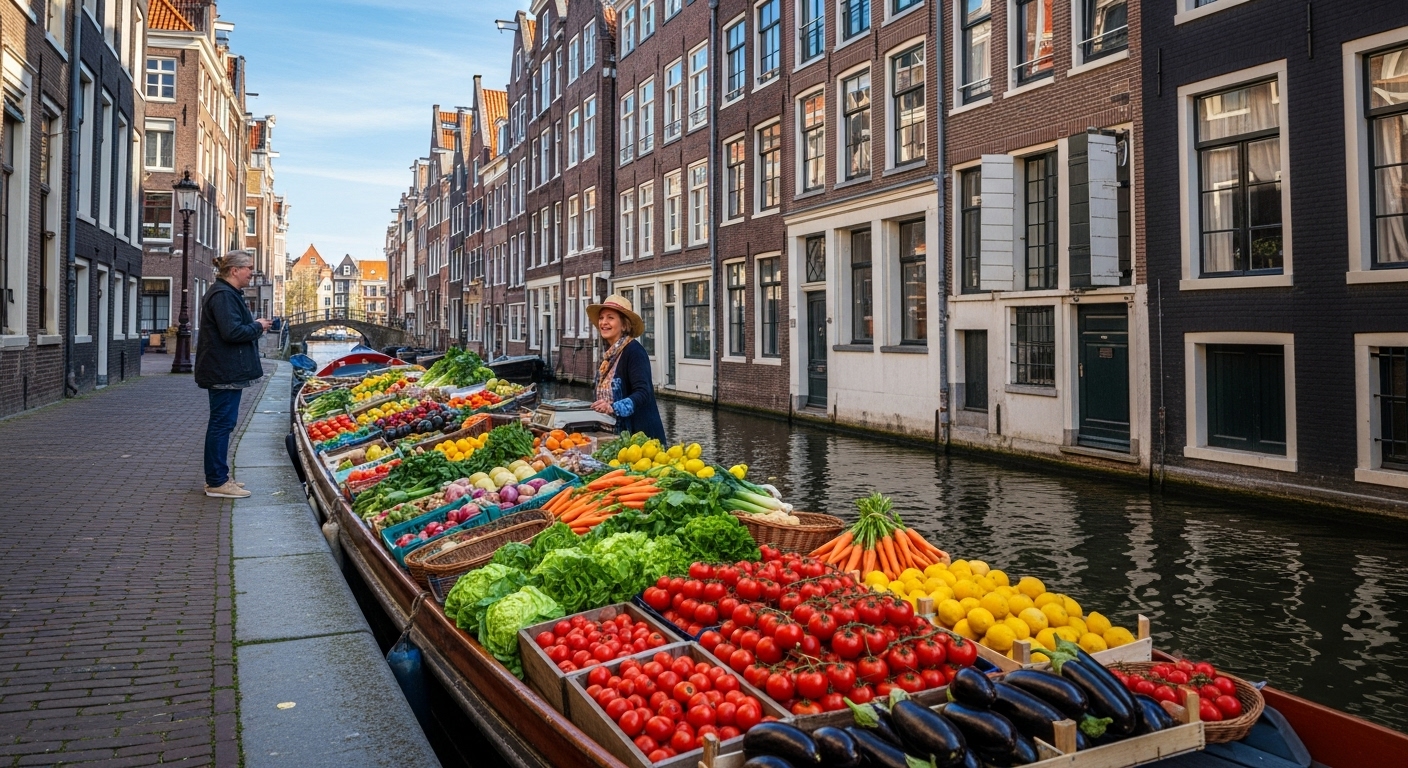
Cities with market boats that dock door-to-door reveal a way of life where shopping arrives by water instead of roads. Imagine opening your front door to find a boat gently pulling up, loaded with fruits, vegetables, bread, and freshly cooked meals. No traffic, no storefronts, no aisles—just a floating market gliding through the neighborhood. Sounds unusual? For millions of people around the world, this is everyday reality.
These cities are shaped by canals, rivers, and tidal waterways, where boats function as delivery vans, grocery stores, and social connectors. Market boats don’t wait in one place. Instead, they move through neighborhoods, docking directly at homes, businesses, and boardwalks. This system transforms water into a living marketplace and turns daily errands into human interactions.
Why Market Boats Exist in These Cities
Market boats emerged out of necessity. In cities built on water, roads were either limited or nonexistent. Transporting goods by boat was faster, cheaper, and more reliable than land travel.
Instead of forcing residents to travel long distances to centralized markets, vendors adapted by bringing goods directly to customers. Over time, this practice became tradition, deeply woven into local culture.
That is why cities with market boats that dock door-to-door are not tourist inventions. They are organic systems built around geography and community needs.
How Door-to-Door Docking Actually Works
Unlike large floating markets where boats gather in one area, door-to-door market boats follow informal routes through canals and rivers. Vendors know which neighborhoods prefer vegetables, fish, or prepared foods.
Residents recognize familiar boats by sound, color, or voice. In many places, vendors announce their arrival with calls or bells. Customers step outside, negotiate prices, and receive goods directly from the boat.
This system removes barriers between seller and buyer, creating trust-based relationships that often last generations.
Historic Roots of Floating Market Boats
Floating commerce has ancient origins. Civilizations along rivers such as the Nile, Mekong, and Tigris relied on boats as primary trade routes.
In Southeast Asia, canal-based trade expanded as cities grew outward from waterways. In Europe, river commerce supported dense urban populations long before modern infrastructure.
Door-to-door market boats evolved naturally in places where waterways functioned as streets rather than obstacles.
Famous Cities Where Market Boats Come to Your Home
Bangkok is one of the most well-known examples. Beyond tourist floating markets, local canals still host vendors who paddle or motor from house to house. According to Encyclopaedia Britannica, canals once defined the city’s entire transport network.
In Vietnam’s Mekong Delta, market boats sell everything from tropical fruit to household supplies. Organizations like National Geographic have documented how river commerce remains essential to daily life.
Even in Europe, remnants survive. In Amsterdam, specialty boats still deliver goods such as cheese, flowers, and fresh produce via canals, supported by the city’s long maritime history highlighted by Amsterdam City Council.
What It Feels Like to Shop From a Boat
Shopping from a market boat feels personal and unhurried. Transactions often involve conversation, recommendations, and shared news.
There is no rush. Prices may be discussed casually. Vendors often remember preferences, offering familiar items before being asked.
This experience turns shopping into a social ritual rather than a task.

Why These Systems Still Survive Today
Despite modernization, market boats persist because they work. They require minimal infrastructure, produce low emissions, and adapt easily to changing water levels.
They also serve communities often overlooked by formal retail systems. Remote neighborhoods, elderly residents, and water-based homes benefit most.
As cities search for sustainable delivery models, cities with market boats that dock door-to-door offer valuable lessons.
Environmental Benefits of Floating Markets
Market boats reduce reliance on roads, trucks, and fuel-heavy logistics. Many operate using small engines or paddles.
Because vendors sell locally sourced goods, supply chains remain short. Packaging waste is often minimal, with reusable containers common.
This makes floating commerce one of the earliest forms of sustainable urban delivery.
Challenges Facing Door-to-Door Market Boats
Urban development poses challenges. Canal closures, pollution, and rising property values threaten traditional routes.
Younger generations sometimes prefer modern retail jobs, reducing the number of vendors willing to continue this lifestyle.
However, preservation efforts and renewed interest in cultural heritage are helping keep these traditions alive.

Visiting Cities With Floating Doorstep Markets
Travelers often encounter these boats unexpectedly, which makes the experience even more memorable.
Respect is essential. Asking before photographing, supporting vendors fairly, and following local customs helps sustain the system.
Guides such as Responsible Travel encourage mindful engagement with living traditions.
What These Cities Teach Us About Urban Living
Market boats demonstrate that cities do not need rigid systems to function well. Flexibility, proximity, and human connection matter.
They remind us that convenience does not have to mean impersonality.
Cities with market boats that dock door-to-door show how commerce can move at the pace of life rather than forcing life to speed up.
Imagine hearing a familiar call outside and stepping out to choose fresh food from a passing boat. Would that change how you view shopping?
Have you ever experienced a floating market outside tourist zones?
If stories like this make you see cities differently, follow WentWorld on social media for more journeys into the world’s most fascinating ways of living.
Catch up on the top stories and travel deals by subscribing to our newsletter!