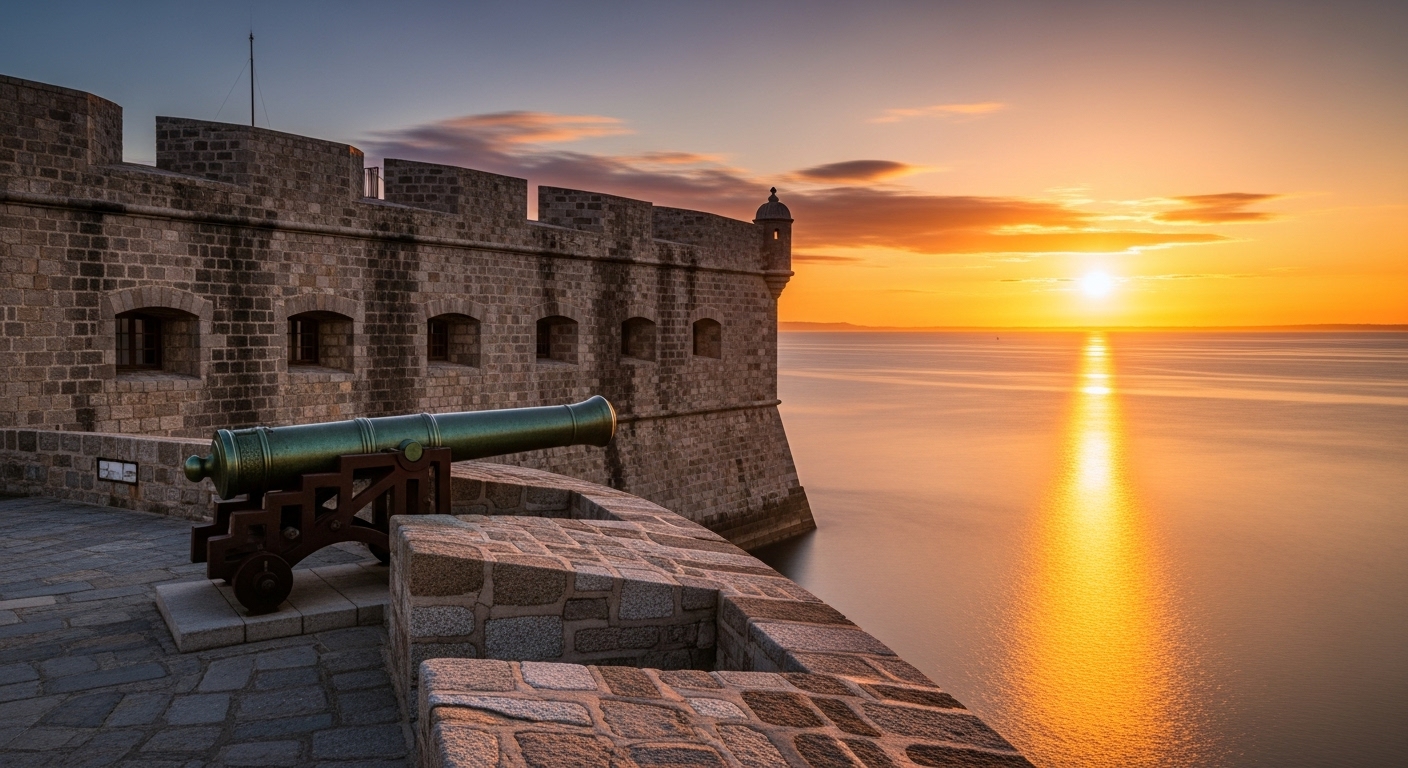
There are moments in travel when time seems to pause, when the sea glows gold, the wind softens, and a single sound carries centuries of history with it. One of those moments happens at harbor forts with sunset cannon ceremonies. As daylight fades and the horizon burns with color, a cannon fires—not in warning, not in battle, but in remembrance. These daily rituals feel ceremonial, powerful, and unexpectedly emotional, even for travelers who arrive simply curious.
Have you ever stood near the water at dusk and felt something ancient stirring beneath the surface of a modern city? Harbor forts with sunset cannon ceremonies create exactly that feeling. They connect visitors to maritime traditions, colonial defense systems, and coastal communities that once relied on precise timekeeping and discipline to survive. Today, these forts no longer guard against invading fleets, but they still guard stories, identity, and shared memory.
In this guide, we explore harbor forts with sunset cannon ceremonies around the world, why the tradition began, how it survives today, and why it continues to draw travelers who crave experiences with meaning rather than checklists.
The origins of harbor forts with sunset cannon ceremonies
The story of harbor forts with sunset cannon ceremonies begins with order, not spectacle. Long before digital clocks and radio signals, coastal cities relied on cannons to mark time. Sunset cannon ceremonies signaled the official end of the day. Ships in the harbor would lower flags, close trade ledgers, and prepare for night. Soldiers would secure gates, and civilians would head home.
These cannons served practical needs. They helped ships synchronize chronometers, which were essential for navigation. They also reinforced military discipline, ensuring everyone followed the same schedule. Over time, what began as a functional signal evolved into a tradition, especially in strategic ports where maritime power shaped daily life.
Many harbor forts with sunset cannon ceremonies were built during colonial expansion, when empires competed for control of trade routes. Stone walls, bastions, and artillery positions faced the sea, forming defensive rings around harbors. Even as warfare changed, the sunset cannon remained, surviving long after the last hostile ship sailed away.
Why these ceremonies still happen today
In an era of smartphones and satellite navigation, firing a cannon at sunset may seem unnecessary. Yet harbor forts with sunset cannon ceremonies persist because they offer something technology cannot: continuity.
Local communities often see these ceremonies as symbols of identity. The ritual connects generations, reminding residents that their city grew from the sea. Tourism has also played a role. Visitors gather nightly, cameras ready, not just for the sound but for the shared anticipation that builds as sunset approaches.
Unlike staged performances, these ceremonies feel authentic. The cannon fires whether the crowd is large or small. That consistency gives the ritual credibility and emotional weight.
Fort George, Scotland: Edinburgh’s maritime heartbeat
One of the most famous harbor forts with sunset cannon ceremonies stands near Edinburgh. Though Edinburgh Castle is inland, its cannon tradition historically synchronized ships in the Firth of Forth. The One O’Clock Gun remains one of Scotland’s most recognizable rituals.
The fort’s elevated position once allowed sound to travel far across water. Today, visitors still gather daily, feeling the echo roll across stone and sea. The experience links urban life to maritime heritage in a powerful way.
Learn more about Edinburgh’s historic defenses at Historic Environment Scotland.
El Morro, San Juan: guarding the Caribbean sunset
San Juan’s Castillo San Felipe del Morro is among the most dramatic harbor forts with sunset cannon ceremonies. Perched above the Atlantic, the fort once defended Spanish interests in the Caribbean. Its cannon fire marked not just time but authority.
Today, the sunset ceremony draws locals and travelers alike. The Atlantic breeze carries the sound across the harbor, while the sky shifts from blue to orange. Standing there, you sense how vulnerable island ports once felt and how essential these forts were to survival.
The U.S. National Park Service provides historical context for El Morro at nps.gov/saju.
Signal Hill, Cape Town: a cannon that still speaks daily
Cape Town’s Noon Gun is one of the oldest continuously fired cannons in the world. Although fired at noon rather than sunset, it remains deeply connected to harbor life. Signal Hill once communicated with ships entering Table Bay, guiding them safely into port.
This tradition highlights how harbor forts with sunset cannon ceremonies evolved differently across regions. Some shifted time, others purpose, but all retained their symbolic power.
You can explore Cape Town’s military history through Iziko Museums.

Valletta, Malta: ceremony above the Grand Harbour
Malta’s Upper Barrakka Gardens overlook one of the Mediterranean’s most strategic harbors. The Saluting Battery below once protected Valletta from naval attack. Today, ceremonial cannon fire honors Malta’s layered history.
Harbor forts with sunset cannon ceremonies here blend military precision with Mediterranean calm. The limestone walls glow warm at dusk, and the harbor reflects centuries of trade, conflict, and cooperation.
More on Valletta’s fortifications can be found at Heritage Malta.
Why sunset matters more than sunrise
Sunset carries emotional weight. It represents closure, reflection, and transition. Harbor forts with sunset cannon ceremonies harness this symbolism naturally. As the sun lowers, the cannon marks the shift from day to night, from activity to rest.
For sailors, sunset once meant danger. Navigation became harder, and threats increased. The cannon provided reassurance and structure. That emotional layer still resonates today, even when danger no longer lurks beyond the horizon.
How travelers experience these ceremonies differently
Some visitors arrive for photography, drawn by dramatic light and historic architecture. Others come by accident, stumbling upon the ceremony while exploring. Many leave surprised by how moving the moment feels.
Harbor forts with sunset cannon ceremonies encourage stillness. People stop scrolling, stop rushing, and simply wait. That pause is rare in modern travel, which makes the experience memorable.
Have you ever encountered a travel moment that felt unexpectedly powerful? These ceremonies often create exactly that kind of memory.
Respecting tradition while visiting
These rituals are not performances created for tourists. They belong to the place. Visitors should arrive early, avoid blocking views, and respect local rules. Loud conversations and intrusive behavior break the shared atmosphere.
Photography is usually allowed, but silence before the cannon fires often feels appropriate. Observing how locals behave provides the best guidance.

The future of harbor forts with sunset cannon ceremonies
As cities modernize, maintaining historic traditions requires effort and funding. Some forts rely on volunteers, heritage organizations, or tourism revenue to continue firing cannons daily.
Fortunately, interest in slow travel and cultural depth continues to grow. Harbor forts with sunset cannon ceremonies fit perfectly into this movement. They offer meaning without spectacle and history without museums.
Organizations like ICOMOS advocate for preserving intangible cultural heritage, including rituals like these.
Why WentWorld explores places like this
WentWorld focuses on travel experiences that reveal how places work, not just how they look. Harbor forts with sunset cannon ceremonies show how history, geography, and daily life intersect.
They remind us that travel does not always require movement. Sometimes, standing still at the right moment tells the whole story.
If you’ve experienced a sunset ceremony like this—or want to—what drew you to it? Was it curiosity, history, or something harder to explain? Share your thoughts with us.
Follow WentWorld on social media to discover more places where quiet traditions still shape unforgettable travel moments.
Catch up on the top stories and travel deals by subscribing to our newsletter!