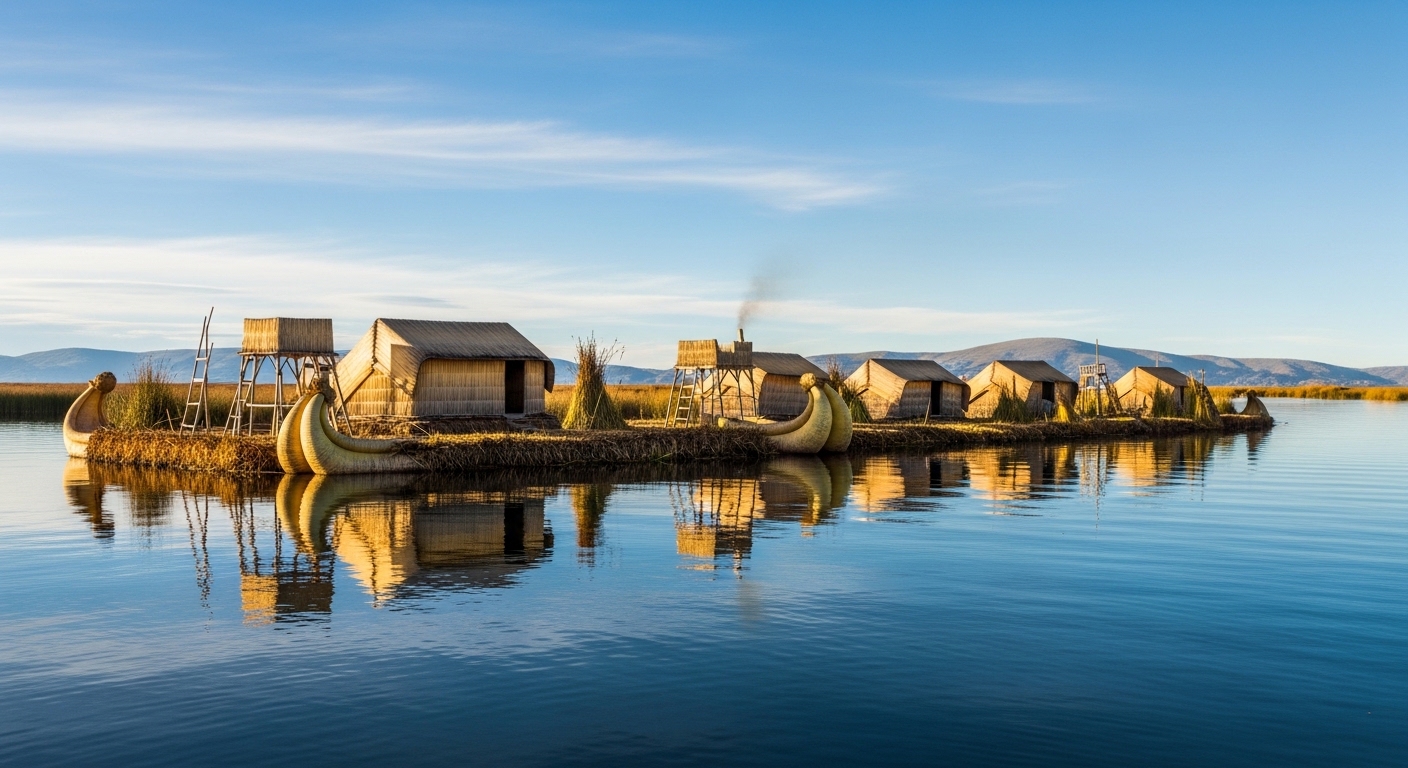
Floating reed islands you can visit responsibly sound almost imaginary, yet they are very real, lived-in places where entire communities have learned to survive on water. These islands are not luxury resorts or modern engineering experiments. They are handmade landscapes, crafted from reeds, patience, and generational knowledge. Long before sustainable travel became a buzzword, people were already living lightly on lakes, floating rather than building, adapting instead of dominating.
There is something quietly powerful about stepping onto an island that gently moves beneath your feet. No engines hum nearby. No concrete towers rise above you. Just water, reeds, sky, and human ingenuity working in harmony. Floating reed islands challenge how we think about land, ownership, and sustainability. They also raise an important question for travelers today: how do we visit such fragile places without harming them?
This WentWorld.com guide explores floating reed islands you can visit responsibly, the cultures that call them home, and how mindful travel can help preserve these rare ways of life. As you read, consider this: when was the last time a destination made you rethink how humans should live with nature?
What Are Floating Reed Islands?
Floating reed islands are man-made platforms built primarily from aquatic plants such as reeds and totora. These plants grow naturally in shallow lakes and wetlands, making them renewable and locally sourced. Islanders harvest, dry, and layer the reeds, binding them together to create buoyant foundations that float atop the water.
What makes these islands extraordinary is not just their construction but their maintenance. Reeds decompose over time, especially when exposed to moisture. To keep the islands afloat, residents constantly add fresh layers. Living on a floating reed island is not a one-time achievement; it is a continuous relationship with the environment.
This lifestyle demands awareness. Every step, every structure, every visitor matters. That is why responsible tourism is not optional here. It is essential.
The Uros Islands, Lake Titicaca
The most well-known example of floating reed islands you can visit responsibly is the Uros Islands on Lake Titicaca, straddling Peru and Bolivia. Sitting at over 3,800 meters above sea level, Lake Titicaca is the highest navigable lake in the world. The Uros people have lived on floating islands here for centuries, long before modern borders existed.
The islands are built entirely from totora reeds, which also serve as food, medicine, boats, and fuel. Houses, watchtowers, and even small schools rest on layered reeds that must be replaced regularly. Walking across the islands feels soft and springy, a gentle reminder that nothing here is fixed or permanent.
Responsible visits to the Uros Islands are possible through community-approved tours departing from Puno. Information from sources like Peru Travel emphasizes cultural respect, small group sizes, and fair compensation. Travelers who listen, observe, and ask thoughtful questions often leave with a deeper appreciation of resilience and adaptability.
Have you ever considered how your daily habits would change if your home literally depended on balance?

Life on Water: More Than a Tourist Attraction
For the communities living on floating reed islands, daily life involves tasks most travelers never see. Early mornings may include reed harvesting, fishing, or repairing platforms weakened by water exposure. Children learn from a young age how to walk carefully and respect the island’s limits.
Modern influences have reached these islands, but not without tension. Solar panels may sit beside traditional reed huts. Mobile phones coexist with ancestral knowledge. Tourism brings income, but also pressure. That balance is fragile, just like the islands themselves.
Responsible travelers understand that these places are homes first, destinations second. Listening more than speaking, observing without interfering, and following local guidance makes a meaningful difference.
Floating Villages of Lake Inle, Myanmar
Another remarkable example of floating communities exists on Lake Inle in Myanmar. While not entirely made of reeds, many homes and gardens float on water-supported platforms. Intha people cultivate floating vegetable gardens anchored with bamboo poles, creating productive farmland atop the lake.
Early mornings on Lake Inle reveal a mirror-like calm, broken only by fishermen rowing with one leg wrapped around their oar. The scene feels timeless, yet it is under increasing pressure from over-tourism and environmental change.
Organizations like Responsible Travel highlight eco-conscious tours that limit boat traffic and support local livelihoods. Visiting Lake Inle responsibly means choosing operators who prioritize sustainability over speed.
When travel impacts a water-based ecosystem, even small actions can ripple outward. Are we prepared to slow down for the sake of preservation?
Why Floating Reed Islands Are Environmentally Significant
Floating reed islands represent one of the most sustainable housing models ever developed. They rely on renewable materials, generate minimal waste, and adapt naturally to changing water levels. In an era of rising seas and climate uncertainty, these communities offer lessons worth studying.
Researchers have long been interested in traditional water-based living. Studies referenced by institutions like National Geographic highlight how indigenous knowledge often outperforms modern solutions in resilience and sustainability.
These islands also support biodiversity. Reeds provide shelter for birds, fish, and insects, creating micro-ecosystems that thrive alongside human activity. Responsible tourism helps protect these systems rather than disrupt them.
The Right Way to Visit Floating Reed Islands
Visiting floating reed islands responsibly begins before you arrive. Choosing ethical tour operators is crucial. Look for experiences that are community-led, limit visitor numbers, and avoid exploitative practices.
Once there, follow local rules closely. Stay on designated paths. Avoid jumping or running. Ask before taking photographs, especially of people. Purchase locally made crafts directly from residents rather than mass-produced souvenirs.
Travelers should also be mindful of what they bring. Plastic waste poses a serious threat to water-based communities. Many islands have limited waste disposal options. Carry reusable items and take trash back with you whenever possible.
Responsible travel is not about restriction. It is about awareness. When we travel thoughtfully, we enrich both our own experience and the destination.
Cultural Exchange Without Exploitation
One of the most sensitive aspects of visiting floating reed islands is cultural exchange. Curiosity is natural, but it must be balanced with respect. These are not open-air museums. They are living, evolving communities.
Engaging in conversation, learning about traditions, and understanding challenges can be deeply rewarding. However, travelers should avoid treating residents as photo opportunities or performers.
Supporting education initiatives, locally guided experiences, or community projects ensures that tourism contributes positively. According to UN World Tourism Organization, community-based tourism plays a vital role in preserving intangible cultural heritage.
Have you ever left a place knowing your visit genuinely helped rather than harmed?

How Climate Change Threatens Floating Islands
Climate change presents serious risks to floating reed islands. Rising temperatures can accelerate reed decomposition. Water pollution threatens plant growth. Unpredictable weather patterns make maintenance more challenging.
Communities already living on the edge of sustainability now face external pressures beyond their control. Responsible tourism cannot solve these problems alone, but it can raise awareness and provide resources.
Travelers who share stories responsibly help amplify voices that might otherwise go unheard. Visiting with intention turns tourism into advocacy.
Why These Places Stay With You
Floating reed islands leave a lasting impression not because of luxury or spectacle, but because they challenge assumptions. They show that humans do not always need to conquer landscapes to survive. Sometimes, adaptation is the most powerful form of resilience.
Walking on reeds, hearing water beneath your feet, and watching daily life unfold at a slower rhythm can be transformative. Many visitors describe a sense of humility and connection they struggle to articulate.
Is it possible that the future of sustainable living lies in lessons from the past?
WentWorld’s Perspective on Responsible Exploration
At WentWorld.com, we believe meaningful travel is rooted in respect, curiosity, and responsibility. Floating reed islands you can visit responsibly represent the kind of destinations that demand more from us as travelers.
They ask us to slow down, listen carefully, and recognize that our presence matters. When approached thoughtfully, these journeys become more than travel experiences. They become conversations between cultures, generations, and environments.
We invite you to share your thoughts. Have you visited a floating community or experienced a place that changed how you view sustainability? What questions did it raise for you?
If stories like this resonate with you, follow WentWorld.com on our social media platforms and join a community that values travel with purpose, awareness, and respect.
Catch up on the top stories and travel deals by subscribing to our newsletter!