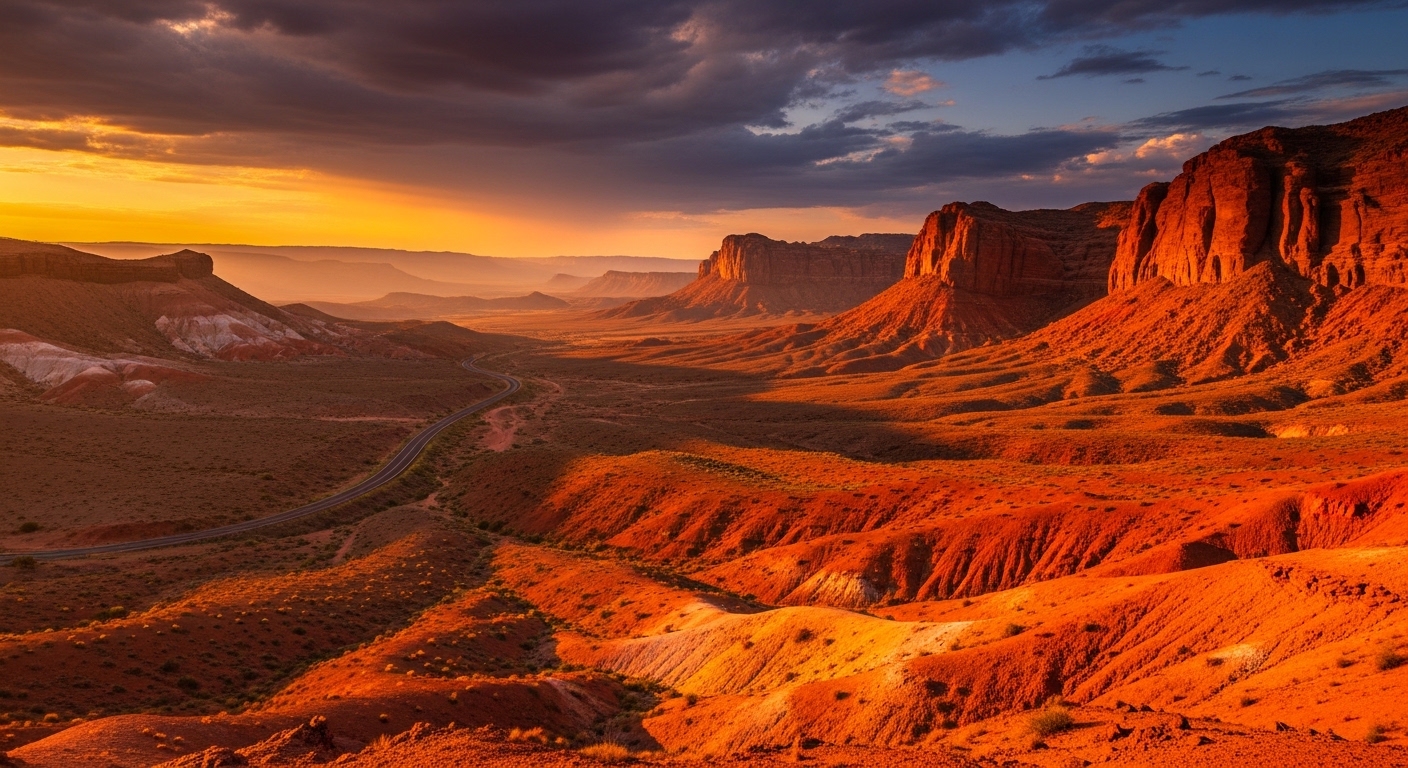
There is something instantly mesmerizing about landscapes where the ground itself feels alive with color. Magma-colored soil gardens are exactly that kind of visual phenomenon. These surreal red earth regions, often shaped by ancient volcanic activity or mineral-rich geology, create scenic loops that feel less like Earth and more like a journey across Mars.
From glowing crimson hills to rust-colored valleys and deep scarlet trails, magma-colored soil gardens attract travelers who crave unusual beauty, dramatic photography, and a sense of walking through geological history. These places are not just scenic — they tell stories written in minerals, heat, pressure, and time.
Have you ever stood somewhere so visually intense that it felt unreal? That is exactly the reaction most people have when they first encounter a true red earth landscape.
What Creates Magma-Colored Soil
The vivid red and orange colors in magma-colored soil come primarily from iron-rich minerals. When volcanic rock breaks down and oxidizes over thousands or millions of years, it produces soil that ranges from bright orange to deep blood-red.
In some regions, the soil’s color comes from laterite — a clay-like material rich in iron and aluminum. In others, it is volcanic ash that has chemically evolved under intense heat and moisture.
Unlike green forests or sandy deserts, red earth environments feel emotionally different. The colors stimulate the brain more intensely, creating a sense of warmth, drama, and even mystery.
Do you think landscapes affect our emotions more than we realize?
Why Scenic Loops Are the Best Way to Experience Red Earth
Many magma-colored soil gardens are best explored through scenic loops — circular driving or hiking routes that reveal changing angles of color, texture, and light. These loops allow travelers to experience how the soil shifts from copper to crimson to dark rust as sunlight moves across the terrain.
Scenic loops are popular because they require no backtracking, offer multiple viewpoints, and often pass through geological layers like cliffs, valleys, plateaus, and riverbeds.
Some of the most famous red earth scenic loops exist in:
- Hawaii’s volcanic regions
- Australia’s outback
- China’s Danxia landforms
- Iceland’s geothermal valleys
- Utah and Arizona in the USA
Would you rather drive a scenic loop or hike one slowly over several days?

Hawaii: Where Fire Became Art
Hawaii offers some of the most dramatic magma-colored soil gardens on the planet. The islands were formed entirely by volcanic activity, and much of the soil still reflects that fiery origin.
At Hawaiʻi Volcanoes National Park, red and black soils mix across crater rims and lava fields. Trails loop around ancient calderas, revealing landscapes shaped by eruptions that occurred centuries ago.
The red earth here feels raw, almost unfinished — as if the planet is still cooling beneath your feet.
Australia’s Outback: The World’s Largest Red Canvas
No discussion of magma-colored soil gardens is complete without Australia. The Outback is essentially a continent-sized red earth gallery.
Regions like Uluru, Kata Tjuta, and Kings Canyon offer scenic loops where the soil glows intensely at sunrise and sunset. Iron oxide saturates the ground, producing reds so deep they appear painted.
Tourism platforms such as Tourism Australia promote these scenic routes as some of the most photogenic landscapes on Earth.
Many visitors describe the Outback as spiritual — not because of religion, but because of its overwhelming sense of scale and ancientness.
China’s Danxia: Painted Mountains
China’s Danxia landforms look like a digital artwork brought to life. These striped red, orange, yellow, and white hills formed through sedimentary layers exposed by erosion.
Scenic loops around Danxia Geopark allow travelers to walk elevated paths through these color bands, offering panoramic views that feel almost artificial.
International travelers often discover these landscapes through guides like Lonely Planet, which highlights Danxia as one of Asia’s most surreal geological wonders.
Iceland: Red Earth in a Land of Ice
Iceland surprises visitors by blending glaciers with magma-colored soil gardens. Beneath the ice lies one of the most active volcanic systems on the planet.
In areas like Landmannalaugar, red mountains, orange slopes, and black lava fields intersect with steaming geothermal vents. Hiking loops here feel like walking through multiple planets in a single day.
Would you expect red soil in a country famous for ice?
United States: Mars on Earth
In the American Southwest, especially Utah and Arizona, scenic loops pass through some of the world’s most cinematic red earth environments.
Places like Bryce Canyon, Zion, Sedona, and Monument Valley display massive red rock formations and mineral-rich soil that changes color throughout the day.
The National Park Service maintains several scenic loops specifically designed to showcase these geological features.
Why Humans Are Drawn to Red Landscapes
Psychologically, humans respond strongly to red tones. Red signals energy, danger, heat, and life. It activates deeper emotional responses than green or blue landscapes.
This may explain why magma-colored soil gardens feel more intense, memorable, and emotionally impactful than many other natural environments.
People often describe red landscapes as:
- Alien
- Dreamlike
- Spiritual
- Powerful
- Unforgettable
Do you think color alone can shape how we remember a place?

Photography and Visual Tourism
Magma-colored soil gardens are becoming increasingly popular on visual platforms because they require almost no editing. The colors are naturally dramatic.
Golden hour is especially important in these regions. As sunlight hits iron-rich soil at low angles, the reds intensify, creating cinematic contrast.
Drone photography has further amplified interest, revealing geometric patterns in scenic loops that are invisible from ground level.
Climate Change and Fragile Red Earth
Despite their rugged appearance, many red earth environments are extremely fragile. Foot traffic, off-road vehicles, and construction can permanently damage soil structures that took millions of years to form.
Several scenic loops now limit access to preserve these environments, using boardwalks, viewing platforms, and controlled routes.
Protecting magma-colored soil gardens is not just about beauty — it is about preserving geological history.
The Future of Red Earth Tourism
As travelers seek unique, non-commercial experiences, magma-colored soil gardens are becoming major attractions.
These landscapes offer something increasingly rare: visual silence. No advertisements. No buildings. Just raw Earth.
They remind us that beauty does not require decoration — it already exists beneath our feet.
Have you ever visited a red earth landscape? Or is it now on your travel bucket list? Share your thoughts and experiences in the comments below.
Follow WentWorld.com on social media to discover more extraordinary landscapes, hidden natural wonders, and places that feel unreal.
Catch up on the top stories and travel deals by subscribing to our newsletter!