There is something profoundly humbling about walking through lava stone cemeteries on volcanic ridges. These are not ordinary burial grounds. Instead, they reveal places where human memory is carved into rock born from fire, where gravestones grow out of eruptions, and where history feels both fragile and eternal at the same time.
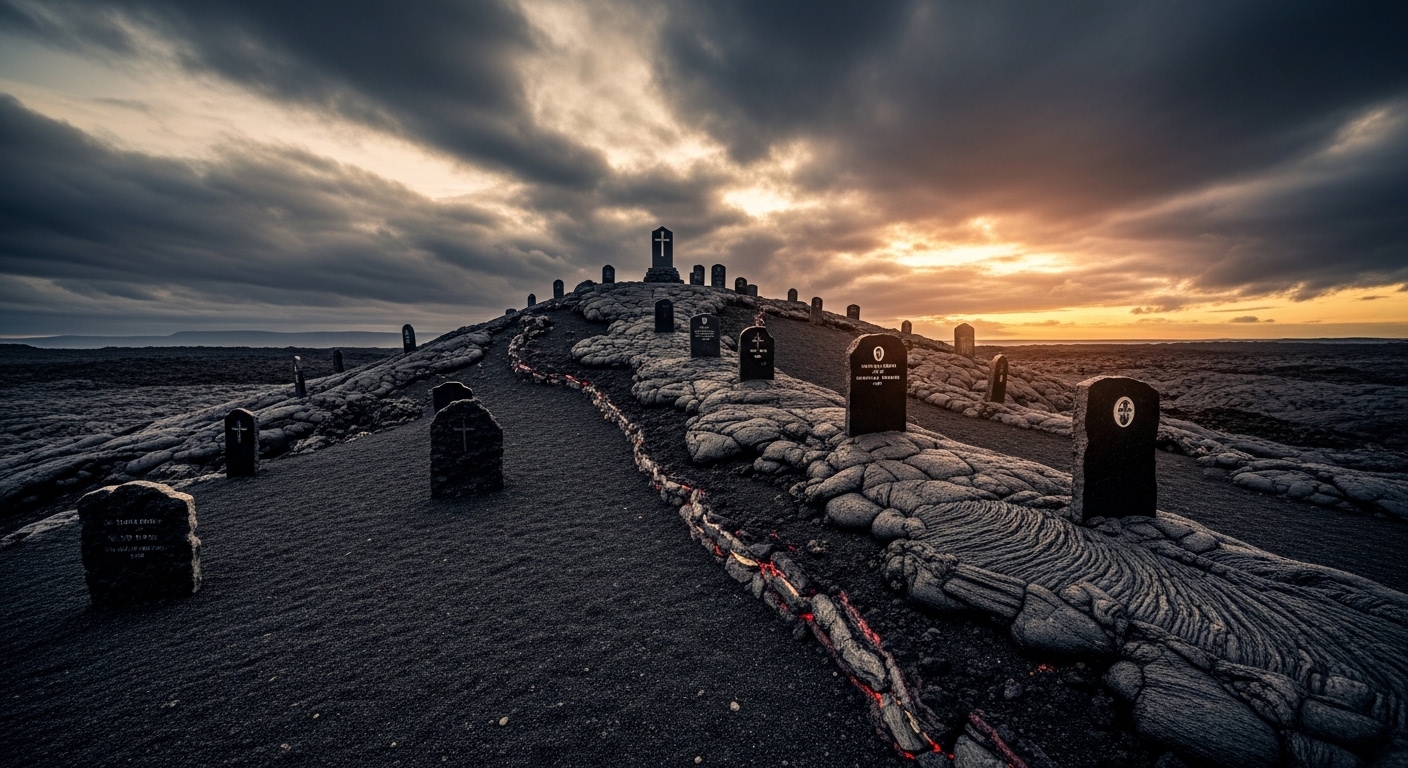
In most parts of the world, cemeteries rest on gentle land. Usually, green fields, soft soil, and quiet paths define how we imagine spaces of remembrance. However, in volcanic regions, death and memory take on a very different character. Here, cemeteries rise on hardened lava, perched on ridges shaped by ancient eruptions.
The ground beneath the dead was once molten. Over time, it flowed, burned, destroyed, and then cooled into the foundation for memory. As a result, these lava stone cemeteries on volcanic ridges feel symbolic in ways that are hard to ignore.
They remind us that life and death share the same origin. Fire creates land, land holds people, people become stories, and stories remain long after everything else turns to stone. Have you ever stood somewhere that felt sacred not because of religion, but because of the land itself?
Why Lava Stone Changes the Meaning of a Cemetery
Lava stone is not just a building material. Rather, it represents a record of destruction and renewal. When people use it in cemeteries, it creates a powerful contrast between violence and peace.
The same rock that once swallowed villages now holds names, dates, prayers, and symbols of love. Unlike marble or polished granite, lava stone appears porous, dark, and irregular.
As a result, it absorbs light instead of reflecting it. Gravestones carved from it often look raw and unfinished, almost as if they still belong to the landscape rather than sitting apart from it.
Because of this, lava stone cemeteries feel like they belong to the land instead of sitting on top of it. They do not impose themselves on nature. Instead, they grow naturally from it.
In many volcanic cultures, people believe burying loved ones in lava connects them more deeply to the earth. Therefore, the ground feels alive, powerful, and remembered for what it once did.
The Silence of Volcanic Ridges
Volcanic ridges remain naturally quiet places. In fact, wind moves differently over hardened lava, and footsteps sound dull, almost absorbed by the rock.
Meanwhile, vegetation grows slowly and sparsely, leaving wide open spaces where sound simply disappears. When cemeteries exist in such landscapes, silence becomes part of the experience.
There are no trees rustling, no soft soil underfoot. Instead, only stone, sky, and stillness surround you.
This silence does not feel empty. On the contrary, it feels heavy with memory. Many visitors describe lava stone cemeteries as emotionally intense, even without personal connections to the people buried there.
In contrast to peaceful garden cemeteries, the land itself demands reflection. Would you feel more connected to history in a place shaped by catastrophe, or one designed for comfort?

Cemeteries Built From Disaster
Across volcanic regions of the world, communities rebuild cemeteries using debris from eruptions. For example, black basalt blocks, hardened ash, and fractured lava slabs become walls, headstones, and pathways.
In some villages, the same eruption that destroyed homes provided materials to rebuild burial grounds. As a result, loss became structure and chaos transformed into memory.
This transformation feels deeply human. Instead of rejecting disaster, people reshape it into something meaningful.
Over time, the landscape that once took lives becomes the place where lives receive honor. Consequently, lava stone cemeteries gain rare emotional depth.
They are not just memorials to individuals. More importantly, they stand as memorials to survival itself.
How Volcanic Landscapes Shape Grief
Grief behaves differently in extreme landscapes. When surrounded by volcanic rock, it feels grounded and stripped of illusion.
There is no softness to hide behind. As a result, lava stone cemeteries on volcanic ridges force people to confront reality without filters.
The land feels raw, the stone feels honest, and the silence feels absolute. Some psychologists believe harsh environments help people manage grief by removing distractions.
In that setting, you remain alone with thoughts, memories, and emotions. Instead of escaping pain, these cemeteries invite you to sit with it.
Have you ever visited a place that made your emotions feel sharper instead of softer?
The Spiritual Meaning of Fire and Stone
In many cultures, people consider volcanoes sacred. Fire represents purification, transformation, and renewal.
Therefore, lava symbolizes not only destruction, but also creation. When people bury loved ones in lava stone, they often express a belief that death does not end existence.
Rather, it marks a transition. The body returns to the same elemental force that created the land itself.
This symbolism makes lava stone cemeteries feel less like places of finality and more like spaces of continuation. In this way, death becomes part of the Earth’s cycle instead of something separate from it.

The Ethics of Visiting Cemeteries as Travelers
Travelers increasingly seek unusual landscapes, and lava stone cemeteries attract attention for that reason. However, these places are not tourist attractions.
They remain active spaces of mourning, memory, and cultural identity. Because of that, visitors should treat photography with respect and keep voices low.
Slow movement matters. These places do not exist as backdrops. Instead, they hold stories still unfolding.
Visiting a cemetery is not about curiosity. Rather, it is about witnessing.
The best way to approach such places involves humility, because you step into someone else’s grief and someone else’s history.
Why These Cemeteries Feel More Relevant Today
In a world facing climate change, rising natural disasters, and environmental instability, lava stone cemeteries feel increasingly symbolic.
They remind us that the Earth is not stable, and neither is human existence. Civilizations rise on shifting ground.
Homes remain temporary. Even memory depends on stone that could one day melt again.
For that reason, these cemeteries teach a quiet lesson: resilience is not about control. Instead, it grows from acceptance.
People who rebuild cemeteries after eruptions understand this better than most. They do not pretend the volcano disappears.
They live beside it, bury beside it, and remember beneath it.
Personal Reflection and Invitation
Lava stone cemeteries on volcanic ridges do not offer comfort. They do not try to make you feel safe.
Instead, they make you feel real. They ask questions without words.
What does permanence mean? What survives destruction? What deserves remembrance?
At WentWorld.com, we believe travel is not just about beauty. Rather, it focuses on meaning.
Few landscapes hold meaning as deeply as those shaped by fire and filled with memory.
We would love to hear from you. Have you ever visited a cemetery in an unusual or extreme location?
Did the landscape change how you felt about death, history, or memory?
Share your thoughts with us, and if stories like this resonate with you, follow WentWorld.com on our social media platforms for more journeys into the world’s most overlooked and powerful places.
Catch up on the top stories and travel deals by subscribing to our newsletter!