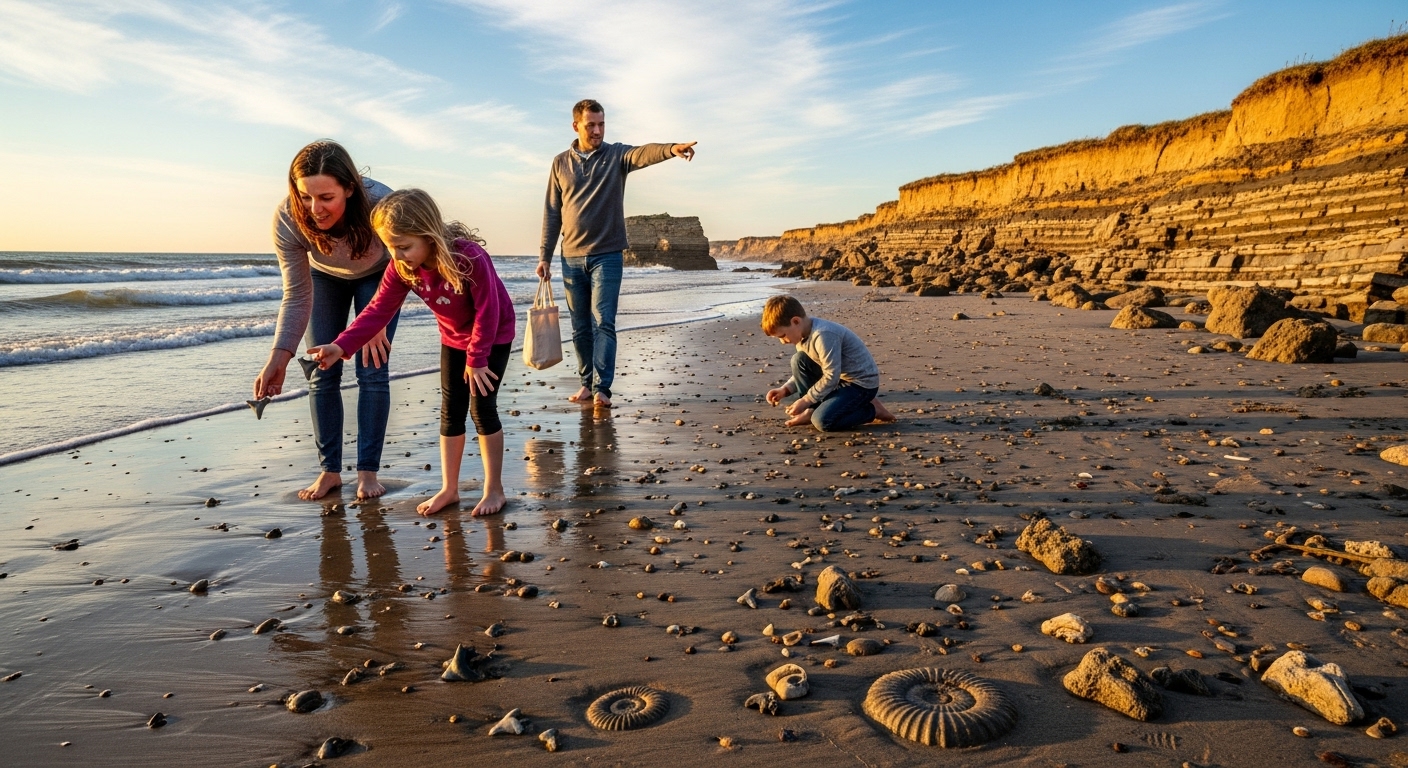
Imagine walking along a sunlit beach, sand between your toes, when suddenly you spot something ancient peeking from the shoreline. Welcome to the world of fossil beaches where you can hunt (legally)—places where history literally washes up on the shore. Unlike regular beaches, these unique coastal sites allow enthusiasts, families, and curious travelers to search for fossils in a responsible and legal way, connecting with a world millions of years old. Have you ever wondered what it feels like to hold a piece of history in your hands?
Fossil beaches offer more than casual exploration; they provide an immersive journey into the Earth’s past. Each fossil tells a story of ancient seas, prehistoric creatures, and ecosystems that existed long before humans walked the planet. From delicate seashell imprints to ancient bones, these beaches are natural museums, open to anyone willing to explore carefully. But what makes a beach suitable for legal fossil hunting, and why are these locations so fascinating for visitors of all ages?
The Fascination With Fossil Hunting
Fossil hunting is more than just a hobby; it’s a way to connect with the deep history of our planet. The thrill of discovery—the chance to uncover something that existed millions of years ago—can be incredibly rewarding. Fossil enthusiasts often describe a sense of awe and respect when they hold an ancient organism in their hands. Have you ever experienced that moment of excitement when uncovering something rare or unexpected during a trip?
What sets fossil beaches where you can hunt (legally) apart from other fossil sites is accessibility and safety. While some fossil-rich areas are protected or private, these beaches provide opportunities to collect specimens responsibly without harming the environment. Park rangers, visitor centers, and local authorities often provide guidelines to ensure that both the fossils and the natural habitat are preserved for future generations.
Legal and Ethical Considerations
It’s important to understand that not all fossil hunting is legal. Many coastal areas, cliffs, and national parks prohibit the removal of fossils to protect scientific research and fragile ecosystems. Legal fossil beaches are carefully regulated, offering rules about what can be collected and how. Often, only small, portable fossils are allowed, and visitors are encouraged to document their finds and leave larger, scientifically valuable specimens for experts. Have you ever considered the balance between personal discovery and the responsibility to preserve nature?
Following local regulations helps maintain a sustainable environment. It ensures that fossil hunting remains an educational and enjoyable activity rather than a destructive one. By respecting these guidelines, enthusiasts contribute to scientific knowledge while enjoying a hands-on adventure.
What You Might Find on Fossil Beaches
Fossil beaches offer a wide variety of treasures, depending on the geological history of the area. Common finds include:
– Fossilized seashells and marine invertebrates
– Ancient bones and teeth of marine reptiles or small terrestrial creatures
– Impressions of plants and leaves
– Petrified wood and ancient driftwood remnants
– Small ammonites, trilobites, or shark teeth
Each discovery provides a glimpse into ecosystems that existed millions of years ago. For example, finding a fossilized shark tooth not only offers a sense of connection to prehistoric oceans but also sparks curiosity about the evolution of species over time. Have you ever held something that made you feel like a true explorer?
Tips for a Successful Fossil Hunt
Visiting a fossil beach can be exciting, but preparation makes the experience more rewarding. Here are some practical tips for a successful hunt:
– Bring a small hand shovel or trowel, but only if allowed.
– Use gloves to protect your hands when examining rocks and fossils.
– Carry a bucket or container to safely store your finds.
– Check tide schedules; low tide often exposes more fossils.
– Wear sturdy shoes for uneven terrain and slippery rocks.
– Bring a field guide or smartphone app to help identify finds.
– Respect the environment; do not remove live creatures or disturb the habitat.
Have you ever gone on a treasure hunt that combined excitement, education, and outdoor exploration? Fossil hunting offers all three, with the added thrill of connecting with ancient history.

Educational Value of Fossil Beaches
Fossil beaches are outdoor classrooms. They offer students, families, and tourists a tangible connection to paleontology, geology, and natural history. Many legal fossil beaches provide interpretive signs or guided tours that explain the origin of fossils, the age of the rocks, and the significance of local findings. For children especially, holding a fossil can spark curiosity, inspire future scientists, and make abstract concepts like “millions of years ago” tangible. When was the last time you learned something so fascinating outdoors?
Fossil Hunting as a Family Adventure
One of the most appealing aspects of visiting fossil beaches is that it’s a fun and safe activity for families. Kids enjoy searching for hidden treasures in the sand, while adults appreciate the historical and geological context. Bringing along a guidebook and encouraging children to document their finds with sketches or photos can turn a day at the beach into an interactive learning experience. Have you ever planned a family trip that combined fun, education, and outdoor adventure?
Popular Fossil Beaches Around the World
Some of the most famous fossil beaches include:
– **Dinosaur Coast, England** – Known for Jurassic fossils and footprints.
– **Calvert Cliffs State Park, Maryland, USA** – Famous for Miocene shark teeth and marine fossils.
– **Fossil Beach, Oregon, USA** – Offers petrified wood and marine fossils along the Pacific coast.
– **Jurassic Coast, Dorset & East Devon, England** – A UNESCO World Heritage Site, ideal for fossil hunting along scenic cliffs.
– **Gogolin Fossil Beach, Poland** – Known for ammonites and marine invertebrates.
Each location offers unique geological features and types of fossils. Visiting multiple sites can provide a broader understanding of Earth’s prehistoric biodiversity. Have you ever traveled to a destination specifically to explore natural history or geological sites?
Responsible Fossil Collecting
Being responsible while collecting fossils ensures that this activity can continue for future visitors. This includes:
– Only taking allowed fossils
– Avoiding damage to rock formations or natural habitats
– Respecting other visitors’ space and finds
– Reporting significant or rare finds to park authorities or paleontologists
Have you ever thought about how small actions, like respecting rules and preserving natural sites, can make a big difference in conservation? Fossil beaches are living reminders of why careful stewardship is essential.
Photography and Documentation Tips
Documenting your finds enhances the experience and provides a personal record of your adventure. Some tips include:
– Take photos of fossils before removing them.
– Photograph the surrounding landscape to provide context.
– Note the location, date, and tide conditions.
– Create a journal with sketches, measurements, and observations.

By documenting your discoveries, you contribute to a deeper understanding of paleontology and can share your findings with friends, family, or online communities. It’s a way of connecting with others who share the same passion for history and nature. How often do you document your outdoor adventures?
Seasonal Considerations for Fossil Beaches
Fossil hunting can vary by season. Winter storms may uncover new fossils but can make beaches slippery and unsafe. Spring and summer provide longer daylight hours, better accessibility, and generally calmer conditions. Autumn can offer cooler temperatures and less crowded beaches, enhancing the experience. Checking local weather conditions and tide schedules is essential for a successful and safe visit.
Fossil beaches where you can hunt (legally) provide a rare opportunity to explore natural history firsthand. They combine adventure, education, and outdoor enjoyment in a unique and unforgettable way. From families with children to dedicated fossil enthusiasts, every visitor can find joy and wonder in discovering relics from the past. Have you ever walked away from a trip feeling like you’d touched history? Fossil beaches offer that incredible feeling.
Next time you plan a coastal adventure, consider visiting a fossil beach. Respect local rules, take your time exploring, and let the wonders of the past unfold beneath your feet. Share your discoveries and stories with fellow enthusiasts and follow us on our social media platforms for more exciting journeys and natural wonders!
Catch up on the top stories and travel deals by subscribing to our newsletter!